This is a recording of a toxic emission event from a nearby petroleum refinery. And of course, the prevailing winds are flowing in the direction of Graniteville. Gabriella Velardi-Ward recorded this event about 4 years ago. She sent the link to the EPA and then spoke to someone at the EPA after that. A man confirmed that these clouds were coming from the petroleum refinery and told Gabriella that the EPA had been there the day before inspecting. Gabriella responded, “What better time to emit toxins than when they know you won’t be coming back?” He told her that if it happened again to call the EPA, even if it was at night, someone would pick up. It happened again, and she called. No one picked up. And she called a third time, and again no one picked up. Nothing happened as far as we can tell.
Category Archives: Home Page Hide
Symphony of Life Recording (Peepers)
A recording of peepers. The project architect told us that there were no animals in the Graniteville wetlands.

The Climate Crisis
We’re eight weeks into the new decade, and, so far, we’ve had the warmest January ever recorded. (Indeed, researchers at the National Oceanic and Atmospheric Administration said that 2020 is more than ninety-eight per cent likely to be one of the five warmest years ever measured, with a nearly forty-nine-per-cent chance to set a new annual record.) We’ve seen the highest temperature ever measured on the Antarctic continent, and also record swarms of locusts descending on the Horn of Africa, a plague which scientists assure us will “become more frequent and severe under climate change.”
I’m calling this new newsletter—and welcome aboard—The Climate Crisis because this is what a crisis looks like. I’ve been at this beat for so long that when I first started writing for The New Yorker on this topic, in the nineteen-eighties, we called it the “greenhouse effect.” “Global warming,” “climate change”—those are fine, too. But they don’t capture where we are right now: not facing some distant or prospective threat but licked by the flames. Thousands of people huddled on Australian beaches this year, ready to wade into the ocean as their only protection from the firestorms raging on the shore. This is not only a crisis—it is the most thorough and complete crisis our species and our civilizations have ever faced, one there is no guarantee that we will survive intact. Does that sound extreme? Consider the conclusions of a team of economists from the world’s largest bank, in a report to high-end clients which leaked to the British press, last Friday: “Something will have to change at some point if the human race is going to survive.”
By The New Yorker. Read the full article here.
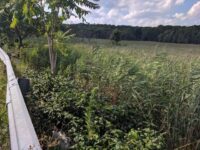
Plan To Turn Staten Island Wetlands Into BJ’s Wholesale Club Moves Forward
Over the objections of residents and public officials, the state said it will issue a permit that will allow a developer to destroy 18 acres of wetlands forest near the north shore of Staten Island in order to build a BJ’s Wholesale Club and a gas station, as well as lay enough asphalt to park 835 cars.
By Alexis Sottile. Read the full article here.
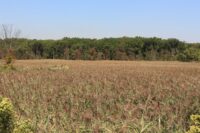
State DEC approves BJ’s development permit, paving way for site’s construction
The state’s Department of Environmental Conservation has approved a permit for the controversial BJ’s Wholesale Club development next to wetlands in Mariners Harbor. paving the way for its construction.
Before the 226,000-square-foot commercial development could be constructed, the DEC needed to approve the Article 24 Permit, which critics said would result in the destruction of 18 acres of woodlands.
Once constructed, the site will include a gas station, 838 parking spaces a supermarket and other retail.
“The State Department of Environmental Conservation granted us the permit because we met all of the State’s requirements for protecting the wetlands,” said the developer’s land use attorney Mitchell Korbey.
By Sydney Kashiwagi. Read the full article here.

Encroaching development threatens a crucial Staten Island wetlands
Situated between the neighborhoods of Old Place and Graniteville, this 42-acre woodlands has been growing in isolation for many decades, inside a triangle of land surrounded by strip malls and chain stores. Thousands of mature trees live here, some soaring 100 feet over the adjoining marshes of the Graniteville Swamp. Soon, more than half of this forest may be bulldozed to make way for a 28-acre development that will include a gas station, 838 parking spaces, and BJ’s Wholesale Club.
By Nathan Kensinger. Read the full article here.

Vital Staten Island Wetlands About To Get A BJ’s Wholesale Club
In this northwest corner of the Forgotten Borough, Velardi-Ward is one of dozens of Staten Islanders who have been waging a battle largely outside of the wider city spotlight, a stand against City Hall that they feel is a matter of life and death for the people who live in this part of the city.
By Alexis Sottile. Read the full article here.

Endangered turtle undetected, so BJ’s development enters public comment period
After extensive surveys found there was no presence of an endangered turtle, a commercial development planned for a site next to a wetland area in Mariners Harbor has entered the public comment period.
Earlier this year, it was believed that the eastern mud turtle, which is on the New York State list of endangered species, may reside in the 534 South Ave. lot area — where there are plans to build 226,000 square feet of commercial space, which would house a BJ’s Wholesale Club, a gas station, a supermarket and other retail, and would include 838 parking spaces.
At the request of the Department of Conservation (DEC), developer Manhattan-based Josifa LLC conducted a survey of the species and found no evidence of the presence of the eastern mud turtle at the site.
By Annalise Knudson. Read the full article here.

Activists Still Hoping to Derail Plan to Develop on Staten Island Wetland
During Superstorm Sandy, low-lying areas like Canarsie, Red Hook and Midland Beach were among the worst hit but some neighborhoods escaped with the help of their local wetlands, which serve as a natural defense against storm surges. In the northwest corner of Staten Island some residents have been fighting to preserve their wetland site from an impending development sanctioned by City Council in 2017.
All but one Council member voted in favor of a retail project that would place a BJ’s store, gas station and a parking lot on top of several wetlands in the Mariners Harbor neighborhood.
By Avery Miles. Read the full article here.
Still time to save the Graniteville wetlands and our homes: Commentary
Without the natural buffer of the Graniteville wetlands, homes will be at risk during the next big storm. There is no doubt that waters will rise and flood our community. If, as a result, FEMA redraws the flood plain maps, residents are forced to get flood insurance that currently isn’t required, homes will suddenly be unaffordable for many neighborhood residents.
Written by Ed Szczepanski and Paula Segal. Read more from the article: https://bit.ly/305gE7O.